- hello@example.com
- +91-822-333-4444



Tips to Reduce Fuel Consumption in Your Toyota Cars
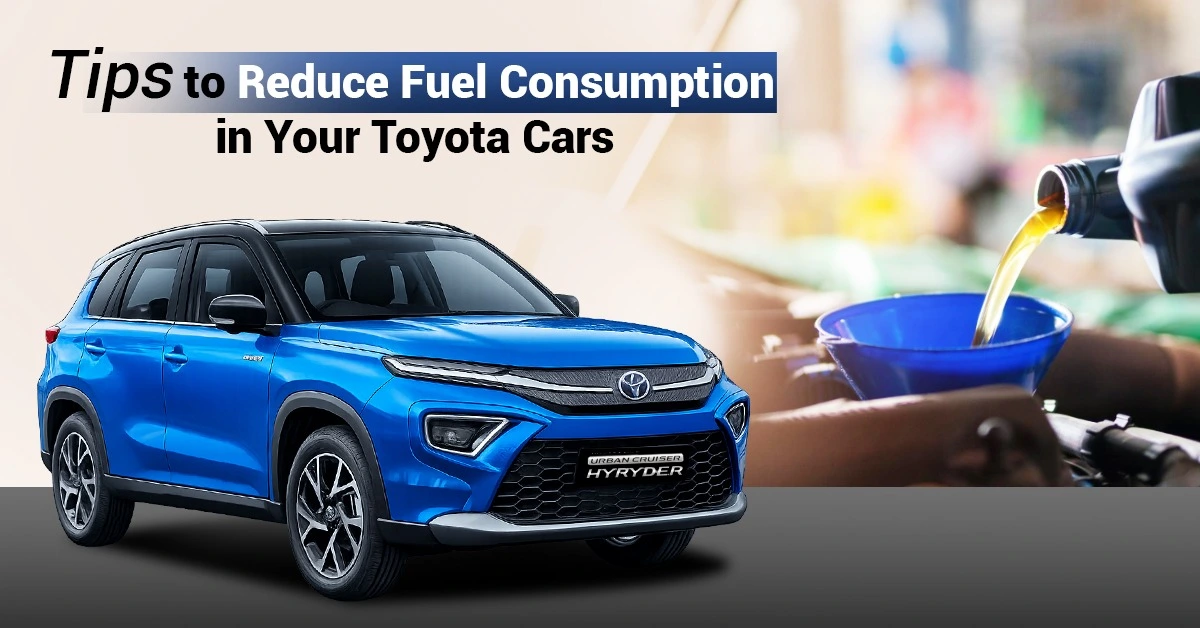
Fuel efficiency has become one of the most important concerns for modern car owners. With rising fuel prices and increasing daily travel, even small improvements in efficiency can lead to significant long-term savings. Whether you drive one of Toyota’s refined luxury cars, a practical commuter vehicle, or a spacious family model, adopting the right habits can dramatically reduce fuel consumption without sacrificing comfort or performance.
Toyota vehicles are engineered for reliability and efficiency, but real-world fuel economy depends heavily on driving behavior, maintenance, and usage patterns. By understanding how your car consumes fuel and making smart adjustments, you can improve mileage, lower expenses, and extend your vehicle’s lifespan.
This guide provides detailed, practical, and proven tips to help Toyota owners maximize efficiency and get the most value from every litre of fuel.
Understand How Fuel Consumption Actually Works
Fuel consumption depends on how hard the engine works to move the vehicle. Sudden acceleration, high speeds, poor maintenance, and unnecessary weight all force the engine to use more fuel.
Every Toyota model, whether it is one of the comfortable premium cars or practical daily commuters, performs best when driven smoothly and maintained properly.
Fuel efficiency improves when:
Engine load is minimized.
Driving is smooth and controlled.
Vehicle weight is optimized.
Maintenance is consistent.
Understanding these fundamentals is the first step toward better mileage.
Maintain Consistent and Smooth Acceleration
One of the biggest causes of excessive fuel consumption is aggressive acceleration. Pressing the accelerator too hard forces the engine to inject more fuel than necessary.
Instead, accelerate gradually and smoothly. This allows the engine to build speed efficiently without wasting fuel.
Smooth acceleration is especially important in heavier vehicles like suv cars, where engine load increases rapidly with sudden throttle input.
Gentle acceleration improves efficiency, reduces engine strain, and enhances passenger comfort.
Maintain Optimal Driving Speed
Fuel consumption increases significantly at high speeds. Most vehicles operate most efficiently within a moderate speed range.
Driving too fast increases air resistance, forcing the engine to work harder. Maintaining a steady speed helps conserve fuel and reduces engine stress.
This principle applies equally to the best sedan cars, SUVs, and larger family vehicles.
Using cruise control on highways can help maintain consistent speed and improve efficiency.
Avoid Unnecessary Idling
Leaving your engine running while stationary wastes fuel without moving the vehicle. Even modern efficient engines consume fuel during idle.
If you expect to stop for more than a minute, turning off the engine can help conserve fuel.
This habit is especially useful in traffic, parking areas, or waiting situations.
Reducing idle time improves efficiency and lowers fuel expenses over time.
Keep Tires Properly Inflated
Tire pressure directly affects fuel efficiency. Underinflated tires increase rolling resistance, forcing the engine to use more fuel to move the vehicle.
Check tire pressure regularly and maintain recommended levels.
Properly inflated tires:
Improve mileage
Enhance safety
Reduce tire wear
This is particularly important for larger vehicles like luxury SUV cars, where tire resistance has a greater impact on efficiency.
Reduce Unnecessary Vehicle Weight
Carrying excess weight increases fuel consumption because the engine must work harder.
Remove unnecessary items from your vehicle, especially heavy objects stored in the boot.
Reducing weight improves efficiency, acceleration, and overall performance.
This is especially beneficial for larger vehicles such as a premium mpv car, where additional weight can significantly affect mileage.
Maintain Regular Engine Servicing
Regular servicing ensures the engine operates efficiently. Clean engine components improve combustion efficiency and reduce fuel waste.
Servicing includes:
Engine oil replacement
Air filter cleaning or replacement
Fuel system inspection
Proper maintenance improves mileage and extends engine life.
Well-maintained vehicles deliver consistent performance and efficiency.
Use High-Quality Fuel
Fuel quality affects combustion efficiency. Using recommended fuel ensures optimal engine performance.
Poor-quality fuel reduces efficiency and may cause engine deposits.
Using proper fuel improves mileage and engine health.
Consistent fuel quality ensures reliable performance.
Avoid Frequent Hard Braking
Sudden braking wastes the energy used to accelerate the vehicle. Smooth and controlled braking helps maintain efficiency.
Anticipate traffic conditions and slow down gradually.
This habit improves mileage and enhances driving comfort.
Smooth driving reduces fuel waste and improves overall vehicle efficiency.
Use Air Conditioning Efficiently
Air conditioning increases engine load, which increases fuel consumption.
Use AC only when necessary and avoid excessive cooling.
At moderate speeds, proper AC use balances comfort and efficiency.
Efficient climate control helps reduce fuel usage without sacrificing comfort.
Maintain Proper Wheel Alignment
Misaligned wheels increase resistance and reduce efficiency.
Wheel alignment ensures smooth movement and optimal fuel economy.
Proper alignment improves handling and reduces fuel consumption.
Regular checks ensure maximum efficiency.
Avoid Over-Revving the Engine
Driving at unnecessarily high engine speeds wastes fuel.
Shift gears smoothly and maintain moderate engine RPM.
Efficient gear usage improves mileage.
This practice is especially useful for both manual and automatic vehicles.
Plan Your Trips Efficiently
Combining multiple errands into one trip reduces fuel usage.
Short trips with cold engines consume more fuel.
Efficient trip planning improves overall efficiency.
Reducing unnecessary driving helps conserve fuel.
Maintain Clean Air Filters
Air filters supply clean air to the engine.
Dirty filters reduce combustion efficiency.
Replacing filters improves mileage and engine performance.
Clean filters ensure efficient engine operation.
Drive Consistently in Traffic
Frequent acceleration and braking increase fuel consumption.
Maintain consistent speed whenever possible.
Smooth driving improves efficiency and comfort.
This is particularly important for urban driving conditions.
Choose Efficient Driving Modes if Available
Many modern Toyota vehicles offer driving modes that improve efficiency.
Eco mode adjusts engine performance for better mileage.
Using efficient modes reduces fuel consumption.
Technology helps improve real-world efficiency.
Benefits of Improved Fuel Efficiency
Reducing fuel consumption provides several long-term advantages:
- Lower fuel expenses
- Reduced engine wear
- Longer vehicle lifespan
- Improved environmental impact
Efficient driving improves overall ownership experience.
This applies to all vehicle categories, including affordable cars, SUVs, and premium vehicles.
Toyota Engineering and Efficiency Advantage
Toyota has built a global reputation for producing efficient and reliable vehicles. Toyota engineering focuses on optimizing performance while minimizing fuel consumption.
Toyota vehicles are designed to deliver excellent efficiency across all categories, including premium sedan car models and family vehicles.
Owners benefit from long-term reliability and cost savings.
Toyota’s focus on efficiency makes it a trusted choice worldwide.
Long-Term Financial Benefits of Fuel Efficiency
Improving fuel efficiency creates significant financial savings over time.
Even small improvements in mileage result in noticeable savings.
Reduced fuel consumption lowers monthly expenses.
Efficient driving habits maximize ownership value.
Fuel efficiency improves both financial and environmental outcomes.
Final Thoughts: Smart Habits Lead to Better Efficiency
Fuel efficiency is not determined by the vehicle alone. Driving habits, maintenance, and proper usage play a crucial role.
By adopting smooth driving techniques, maintaining your vehicle properly, and avoiding unnecessary fuel waste, you can significantly improve efficiency.
Whether you own a premium sedan car, a family-focused MPV, or one of Toyota’s refined luxury cars, these practical tips help maximize mileage and reduce ownership costs.
Smart driving not only saves money but also ensures your Toyota delivers reliable performance for years to come.
Efficient habits turn every drive into a smarter and more economical experience.
Monitor Fuel Efficiency Regularly and Track Your Driving Patterns
One of the most effective ways to improve fuel consumption is to actively monitor your vehicle’s mileage. Many modern Toyota vehicles provide real-time fuel efficiency data through the instrument cluster or infotainment system. Paying attention to these readings helps you understand how your driving habits affect fuel usage.
For example, you may notice that aggressive acceleration reduces mileage immediately, while smoother driving improves it. Tracking these patterns allows you to adjust your driving style accordingly. Owners of premium sedan car models often benefit greatly from this feature, as refined engines are designed to reward efficient driving behavior.
You can also calculate fuel efficiency manually by tracking distance travelled and fuel consumed. Over time, this gives a clear picture of your vehicle’s performance and helps identify areas for improvement.
Reduce Drag by Keeping Windows and Exterior Optimized
Aerodynamic drag plays a significant role in fuel consumption, especially at higher speeds. Driving with fully open windows creates resistance, forcing the engine to work harder.
At highway speeds, keeping windows closed improves airflow and efficiency. This is particularly beneficial for larger vehicles such as a premium mpv car, where aerodynamic resistance has a greater effect due to vehicle size.
Additionally, avoid installing unnecessary roof accessories unless needed. Roof carriers and external attachments increase drag and reduce mileage.
Maintaining clean vehicle surfaces also improves airflow efficiency. While this may seem minor, small improvements collectively enhance fuel economy.
Warm Up Your Vehicle Efficiently
Modern Toyota engines do not require long warm-up periods. Driving gently immediately after starting allows the engine to reach optimal temperature faster and more efficiently.
Avoid leaving the vehicle idle for extended warm-up, as this wastes fuel unnecessarily.
Gentle driving during initial minutes improves efficiency and protects engine components.
This approach works effectively across all vehicle categories, including luxury suv car models and compact commuters.
Replace Engine Oil on Schedule
Engine oil reduces friction between moving components. Over time, oil loses its effectiveness, increasing engine resistance and fuel consumption.
Replacing engine oil at recommended intervals ensures smooth engine operation and optimal efficiency.
Fresh oil improves engine performance, reduces wear, and enhances mileage.
Regular oil maintenance is essential for both performance and long-term reliability.
Use Braking Momentum Wisely
Maintaining momentum is key to improving fuel efficiency. Constant stopping and starting wastes fuel, as the engine must repeatedly rebuild speed.
When approaching traffic signals or slowing vehicles, release the accelerator early instead of braking suddenly. This allows the vehicle to slow naturally and conserves fuel.
Efficient momentum management improves mileage and enhances driving smoothness.
Choose the Right Vehicle for Your Driving Needs
Selecting a vehicle that aligns with your daily driving requirements also plays an important role in fuel efficiency. Smaller vehicles generally consume less fuel, while larger vehicles offer greater space and versatility.
Toyota offers a wide range of options, from compact affordable cars to spacious SUVs and refined premium models.
Choosing the right vehicle ensures balanced performance and efficiency.
Matching your driving needs with the appropriate vehicle category maximizes fuel savings and ownership satisfaction.
Book a Toyota premium car test drive today to experience the performance, comfort, and efficiency that suits your driving needs.